
Not being married doesn’t really change the most important part—you’re both still your child’s parents. Even if the relationship has ended, your responsibility towards your child doesn’t disappear. They still need support, care, and involvement from both of you in their everyday life.
Where things can feel a bit different is on the legal side. In most cases, the mother automatically has parental responsibility from the moment the child is born. For fathers, it depends—if they’re named on the birth certificate, they usually have it too; if not, they may need to take extra steps to have it recognised.
This can come into play when decisions need to be made about things like school, healthcare, or general upbringing. And that’s often where confusion or disagreements start to show up.
But underneath all of that, the focus really shouldn’t shift away from what matters most—your child. Even if things between you as parents aren’t easy right now, there are still ways to work things out in a practical, calm way so your child doesn’t end up caught in the middle.
How Does Mediation Work for Parents Who Were Never a Couple Anymore?
Mediation ENGLAND is designed to help parents have calm, structured conversations—especially when communication has become difficult. It doesn’t matter whether you were married, in a long-term relationship, or never really together in the first place. If you’re worried about things going to court, this guide explains how to avoid it.
A mediator doesn’t pick a side or decide things for you. They’re simply there to help you talk things through without it turning into an argument. Both of you get a chance to say what’s on your mind, and the conversation stays focused on your child and what will actually work in day-to-day life.
Sessions can happen face-to-face or separately (sometimes called “shuttle mediation”), depending on what feels most comfortable.
It’s completely normal for parents to find agreement difficult ENGLAND—especially when emotions are running high. In many cases, it’s not about stubbornness; it’s about trying to balance practical realities with what’s best for the child.
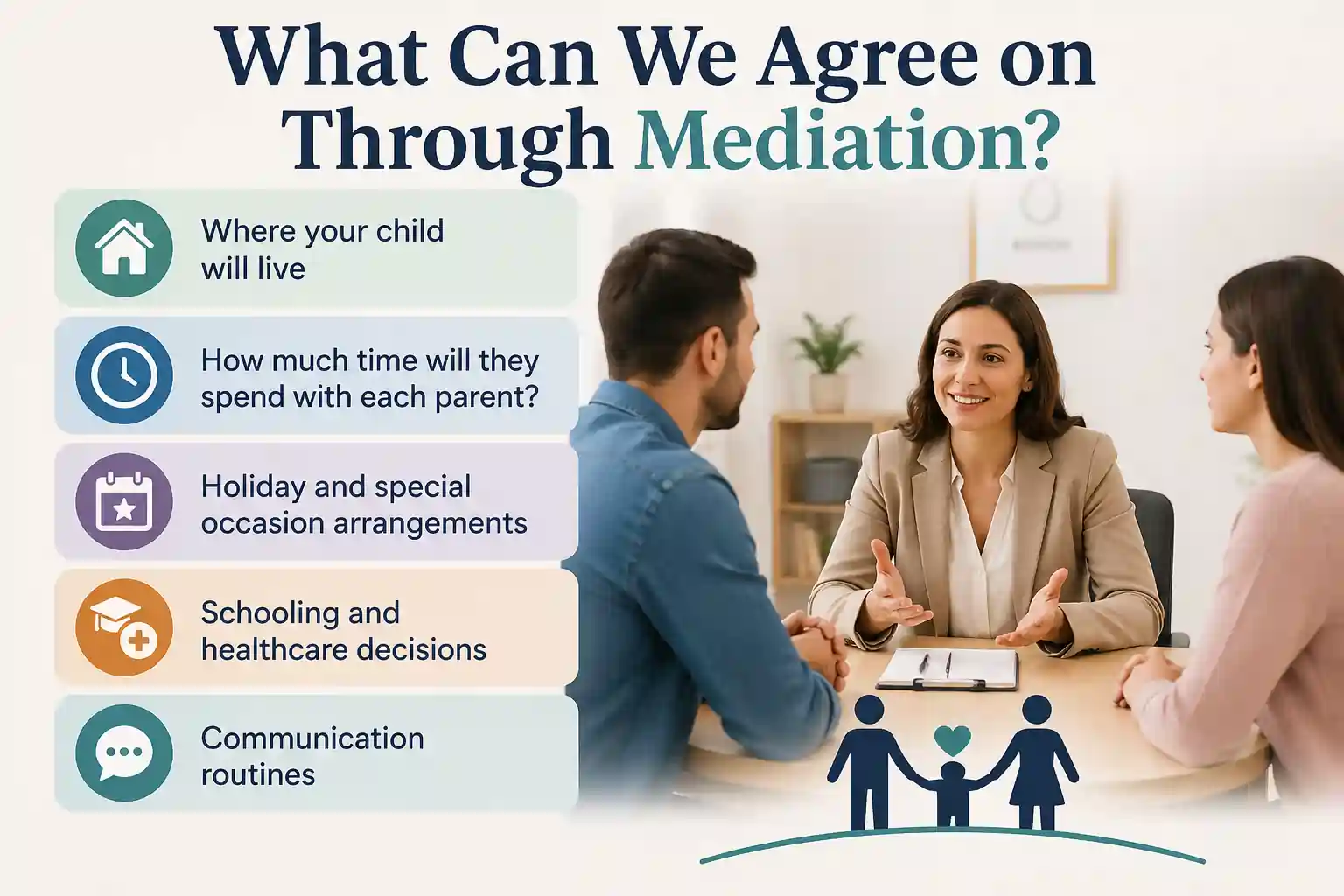
What Can We Agree on Through Mediation?
Mediation ENGLAND gives you the space to sort out practical arrangements that affect your child’s day-to-day life. This often includes:
- Where your child will live
- How much time will they spend with each parent?
- Holiday and special occasion arrangements
- Schooling and healthcare decisions
- Communication routines
You can also discuss financial contributions and how you’ll handle future changes. The process is flexible, so you’re not limited to a fixed checklist—you can cover whatever matters most to your family.
What If We Disagree on Parenting Arrangements?
Disagreements are completely normal. Of course, if parents agreed, there would be no need for mediation!
They help to unravel those scored arguments into bite-sized conversations. Rather than playing the role of attorney, you will be tasked to do what is best for your child and seek solutions based on compromise.
Sometimes, progress is gradual. You might not get it all worked out in a single session, but little steps forward will help.
Do Fathers Have Rights If We’re Not Married?
Yes, fathers do have rights—but they may need to formalise them.
If a father is named on the birth certificate (in many cases after a certain date in the UK), he usually has parental responsibility. If not, he can apply for it through a legal agreement or court order.
British Family Mediation Service ENGLAND can be really useful in situations like this. It gives both parents a chance to sit down together and talk openly about their roles, responsibilities, and what they expect moving forward—without rushing straight into legal action.
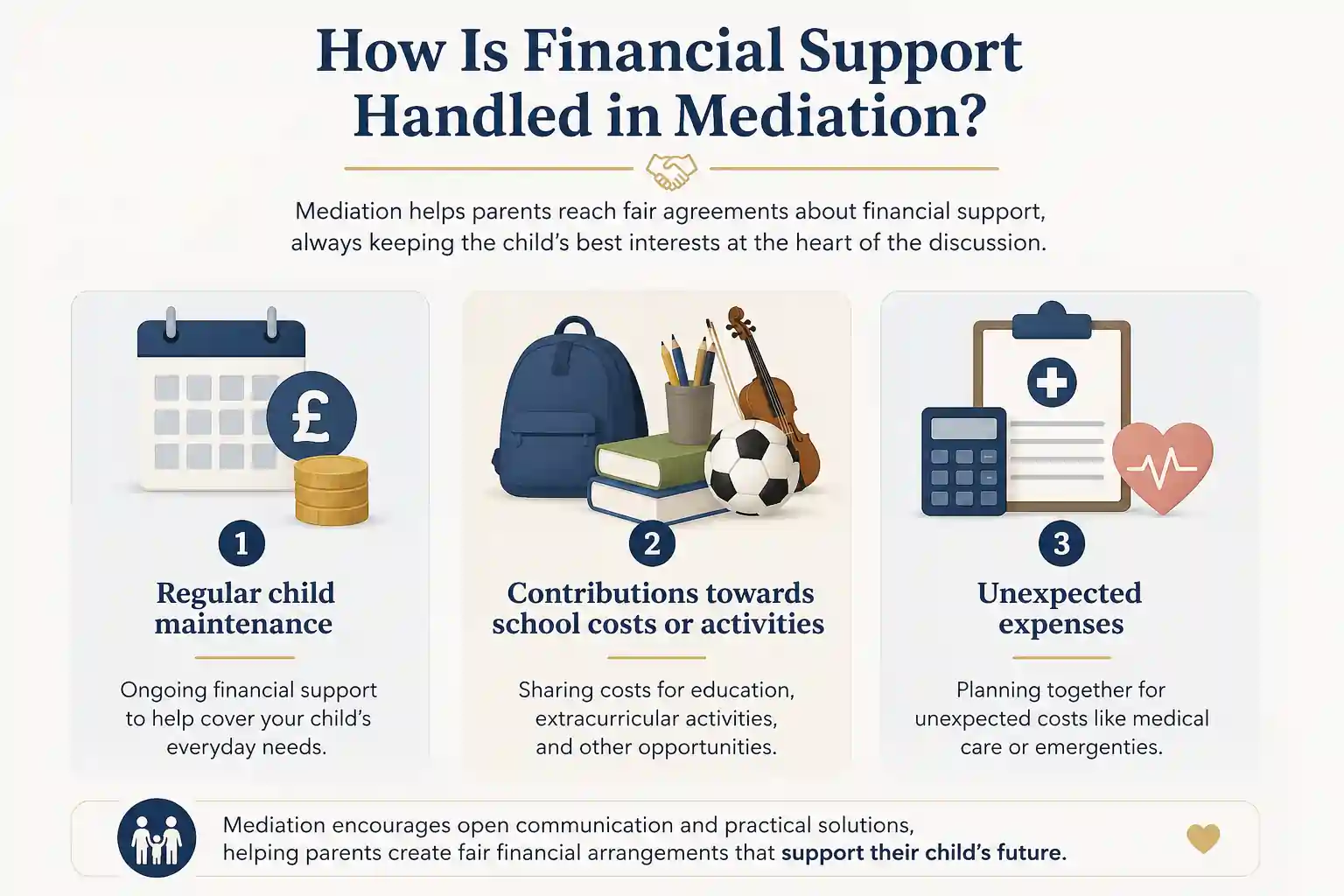
How Is Financial Support Handled in Mediation?
Financial support is a key part of parenting after a separation. Mediation ENGLAND gives you both the space to talk things through calmly and agree on what works best for your child. This can include:
- Regular child maintenance
- Contributions towards school costs or activities
- Unexpected expenses
Although mediators don’t have the power to enforce payments, they help guide the conversation so you can reach a fair and practical agreement. If needed, you can make things official through the proper legal channels later.
What If Communication Between Us Has Broken Down?
This is one of the most common reasons people turn to mediation.
When conversations turn into arguments—or stop altogether—it becomes hard to make decisions about your child. Mediation ENGLAND creates a safe, structured environment where communication can start again.
Even if you don’t feel ready to sit in the same room, options like shuttle mediation mean you can still take part without direct interaction.
Is Mediation Better Than Going to Court for Unmarried Parents?
In many cases, yes. Mediation is usually:
- Less stressful
- Faster than court proceedings
- More cost-effective
- Focused on cooperation rather than conflict
Court decisions are made by a judge who doesn’t know your family personally. Mediation, on the other hand, keeps control in your hands—you create an agreement that works for your unique situation.
That said, if mediation isn’t suitable (for example, in cases involving safety concerns), court may still be necessary.

What If One Parent Refuses to Attend Mediation?
Mediation ENGLAND is voluntary; this means that both parents need to agree to participate.
A single parent can still go to an initial meeting (often called a MIAM—Mediation Information and Assessment Meeting) if the other parent refuses. This demonstrates to the court that you have tried mediation before seeking recourse in a legal manner. What Happens When Parents Can’t Agree on Child Arrangements ENGLAND?
Simply understanding the process of mediation even convinces some potentially reluctant parents to agree to give it a try.
Can The British Family Mediation Service Help Us Create a Long-Term Parenting Plan?
Absolutely. One of the strongest advantages of mediation is that it encourages you to look beyond the here and now.
Make a Parenting Plan that includes the following:
- Daily routines
- Future changes (like starting school)
- Communication guidelines
- How are you going to settle any future disputes?
A clear plan reduces uncertainty and helps both the mother and father to stay consistent, providing much-needed reassurance for kids.
Common Questions Clients Ask
Q: We were never married and now we’ve split up—how do we decide where our child should live without it turning into a constant argument?
Mediation ENGLAND gives you a calm, neutral space to talk things through. It helps you focus on what’s best for your child and agree on a simple, stable routine—so things feel less stressful.
Q: My ex and I barely speak without it escalating—can mediation still work if communication has completely broken down between us?
Yes. You don’t have to sit together if it feels too difficult. Shuttle mediation allows the mediator to speak to each of you separately. This keeps things calm while still helping you reach agreements.
Q: What can I do if my child’s father isn’t registered on the birth certificate, but wants to be involved that I’m worried he won’t have parental rights?
Mediation allows you both to agree on the father’s place in your child’s life, including time and participation. While you can still pursue your legal options, mediation ENGLAND will allow the process to go more smoothly and without much contention.
Q: We disagree on everything from school choices to holidays—how can mediation help when we just can’t seem to agree on anything?
A mediator breaks issues into smaller parts and keeps the focus on your child. This makes it easier to find compromises, even if you don’t agree on everything straight away.
Q: I’m concerned about money—how do we fairly sort out child maintenance and extra costs without it becoming another source of conflict?
It enables discussion about finances in a practical, clear manner through mediation ENGLAND. An agreement of regular support and shared costs, which is agreed upon (in advance), as to what both sides feel comfortable with and equitable.
Q: I want a clear, long-term plan for my child, but I’m worried things will keep changing—can mediation really help us create something stable?
Yes. British Family Mediation Service ENGLAND helps you create a parenting plan that covers both now and the future. This brings clarity, reduces conflict, and gives your child a sense of consistency.
For Further Information, please Call Us ON 03300100360